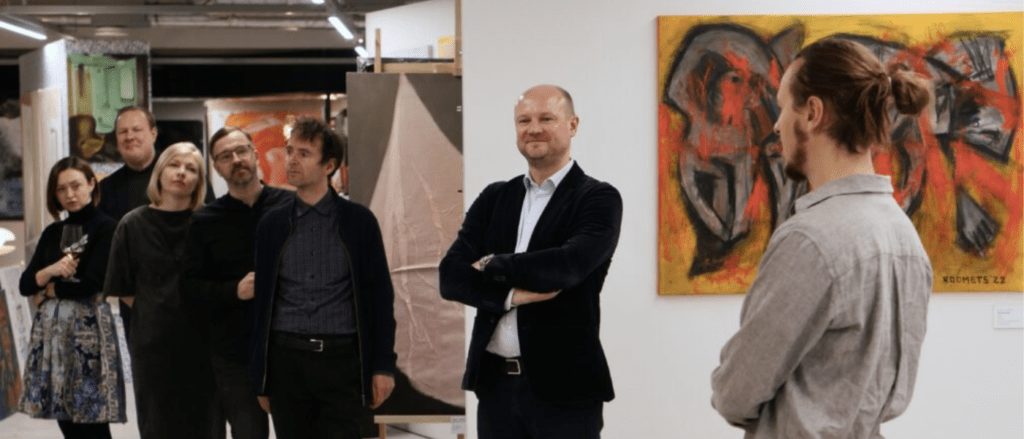
At the end of January, we organised an entertaining art auction in Karepa. On Shrove Tuesday, at a discussion evening held at the PoCo Museum, the topic was auction records as well as the broader questions of price, value, and the risks associated with buying art.
In preparing for the discussion, we reviewed the latest global art market reports by artprice.com and Art Basel. It is always interesting to find parallels with what is happening in Estonia. Auctions themselves are the most transparent part of the art market – both the supply (artists, works) and the results (prices, growth, unsold works) are publicly available for anyone interested to analyse.
However, when drawing conclusions and examining records, one must of course remain within the limits of this visible segment. The majority of art sales – gallery transactions and works purchased directly from studios, which together account for most of the art market – are not equally visible. 72% of art sales take place through intermediaries (at fairs and in galleries).
Even when looking at the most expensive transactions in history, the first and ninth highest prices were achieved at public auctions, while all the others were private sales (see: List of most expensive paintings – Wikipedia). These nine-figure numbers make for compelling headlines, but they represent a very narrow buyer segment – there are just over 3,000 billionaires worldwide, with an average age of 66. The financial capacity and generational preferences of the average art buyer may differ significantly. The main impact of these top results is perhaps on overall market sentiment – whether there is reason for optimism or pessimism.
As a sales method, auctions have traditionally been associated with the secondary market and artists with limited supply (those no longer living). Auctions for contemporary art are a more recent phenomenon, gaining real momentum only at the beginning of this century. The entire field has also been significantly transformed by the rise of online auctions and the sheer abundance of supply.
Of the global art market’s annual turnover of 58 billion dollars, the total revenue from contemporary art auctions between July 2024 and June 2025 amounted to just 1.44 billion dollars, representing 16% of the total auction market. Approximately 126,000 works were sold at auction worldwide, with works by at least 47,000 artists offered. A notable trend in recent years is the growing share of contemporary (living) and young (under 40) artists. 18% (6,522) were debutants – contemporary artists who sold at least one work at auction for the first time – and 3,000 of them were under 40.
Observing the local auction market, one can draw parallels with the popularity of young art auctions in Estonia. It is equally interesting to note that internationally, an average of 65% of works offered at auction are sold. At Estonian art auctions last autumn, the figure was 68%.
In its autumn art market report, Art Basel also addressed collectors’ perceived risks. Their study showed that risk perception is higher at the beginning of the collecting journey, especially regarding financial or investment risk – first-time buyers are most concerned about whether a work will appreciate in value over time. As experience grows, this factor becomes less important and heightened risk perception diminishes. Experienced collectors are more focused on artistic value, enjoyment, and subjective appeal.
For many, auctions feel like a safe environment precisely because of their transparency – a public price formed through competition, and therefore presumably valuable to other bidders as well. At the same time, they offer the possibility of remaining anonymous.
Nevertheless, I would recommend making your first contemporary art purchases in a gallery. There, you can speak directly with the gallerist about the work, the artist, and their long-term potential. More importantly, you can take the time to truly get to know and experience the artwork itself, to address and share any perceived risks or doubts.
In a gallery, it is also possible to acquire works by artists who may not yet appear at auction – to support a career at its beginning and take part in a longer journey. When buying art, one does not need to think immediately about resale. Yet it is self-evident that those who do not buy art today will have nothing to consign to auction or pass on in 20 years’ time.